
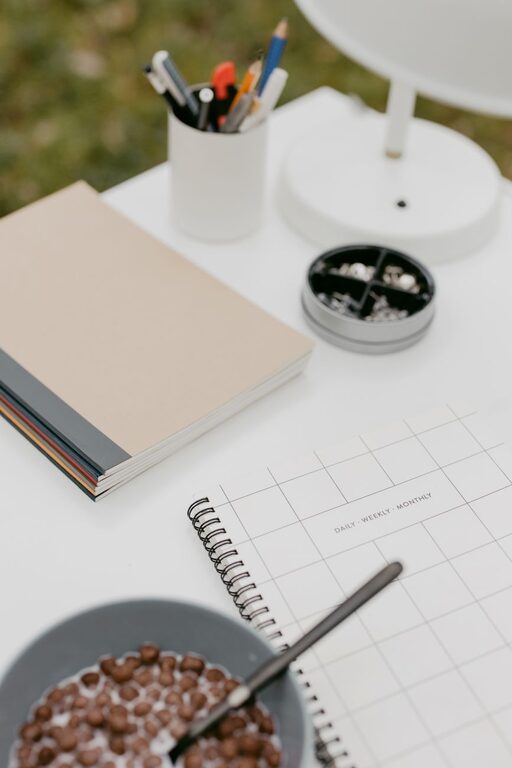
A notebook can be beautiful, well made, and highly recommended—but still end up unused in a drawer. Choosing the right one is less about finding the “best” notebook and more about finding one that fits the way you think, write, and move through your day.
The ideal notebook should feel easy to reach for. It should match your writing habits, carry comfortably, and have enough structure to support your needs without making every page feel like a task. Whether you want a place for ideas, lists, sketches, notes, or personal reflections, a few thoughtful choices can help you find a notebook you will actually use.
Start with the notebook’s purpose
Before comparing paper types, covers, and page layouts, decide what you want the notebook to do. A notebook for daily planning will have different requirements from one used for drawing or recording ideas.
Consider whether you need a notebook for:
– Daily to-do lists and schedules
– Work or school notes
– Journaling
– Creative writing
– Sketching
– Travel notes
– Capturing quick ideas
– Tracking hobbies or personal projects
You may use one notebook for several purposes, but a specific purpose can make it easier to choose. For example, a compact notebook may be ideal for quick notes, while a larger book may be more comfortable for planning or writing longer entries.
If you are unsure, think about the moments when you most often wish you had paper nearby. Those moments can reveal what type of notebook would be most useful.
Choose a size that fits your routine
Notebook size affects how often you carry and use it. A large notebook offers plenty of room, but it may stay at home because it is inconvenient to transport. A small notebook is portable, but its limited writing area may feel restrictive.
Common options include:
Pocket notebooks
Pocket notebooks are easy to carry in a jacket, purse, or small bag. They work well for short lists, reminders, quick observations, and ideas. Their main drawback is limited space, especially if you write in large letters or prefer detailed notes.
Medium notebooks
Medium-sized notebooks offer a useful balance between portability and writing room. They can fit in most backpacks and work bags while providing enough space for daily notes, planning, and journaling.
Large notebooks
Large notebooks are useful for brainstorming, detailed notes, drawing, and projects that require room to spread out. They are often more comfortable for desk use than for carrying around.
Choose the largest size you will realistically carry or keep within reach. A notebook that is always nearby is more useful than one with perfect dimensions that you rarely open.
Pick a page layout you enjoy using
The page layout can strongly influence how naturally you use a notebook. The right choice depends on whether you prefer structure, flexibility, or a combination of both.
– Ruled pages: Best for traditional writing, lists, and notes. Lines provide guidance without requiring much planning.
– Blank pages: Ideal for sketches, diagrams, free-form writing, and creative work. They offer maximum flexibility but may feel less organized.
– Grid pages: Useful for charts, tables, lettering, diagrams, and neat writing. The grid can add structure without being as noticeable as lines.
– Dot grid pages: A versatile option for bullet lists, planning, drawing, and journaling. The subtle dots provide guidance while leaving the page open.
– Planner layouts: Helpful if you want dates, calendars, or sections built into the notebook. They can save time but may feel limiting if your plans change often.
If you are not sure which format you prefer, consider how you naturally use loose paper. Do you write in straight lines, draw boxes, make lists, or fill pages with sketches? Your existing habits are a good guide.
Pay attention to the paper
Paper affects comfort, appearance, and the types of pens you can use. If the paper feels unpleasant, ink spreads through the pages, or your pen skips, you may avoid the notebook even if everything else is appealing.
Think about the writing tools you use most often. Ballpoint pens usually work well on a wide range of paper. Gel pens, fountain pens, markers, and brush pens may need thicker paper to prevent ink from showing through or soaking into the page.
When possible, test a few pages before buying. Look for:
– Smoothness under your favorite pen
– Minimal ink bleeding
– Limited show-through on the back of the page
– Pages that are not too thin or fragile
– Enough space between lines
Thicker paper often feels more satisfying, but it can make a notebook heavier and more expensive. Choose paper quality based on your actual tools rather than assuming the thickest paper is always best.
Consider the binding
Binding affects how a notebook opens, lays flat, and fits into your bag.
Spiral binding
Spiral notebooks often open flat and provide plenty of flexibility. They are convenient for writing on a desk, but the coils can take up space and may catch on other items in a bag.
Sewn binding
Sewn notebooks are usually durable and may open more comfortably than glued books. They are a good choice for regular writing, especially when you want a notebook that can withstand frequent handling.
Glued binding
Glued notebooks can look clean and simple. Some do not open completely flat, which may be inconvenient for writing near the spine. Check the binding before buying if flat pages are important to you.
Disc or refillable binding
Refillable systems let you move, replace, or add pages. They can be useful for organizing projects, but they may be bulkier and require extra planning.
The best binding is the one that makes writing feel easy. If you find yourself holding a notebook open with one hand while trying to write with the other, it may not suit your routine.
Choose a cover that matches how you use it
A durable cover protects the pages, especially if you carry the notebook daily. Hard covers offer more protection and create a stable writing surface. Soft covers are lighter and often easier to pack.
Consider your usual environment:
– For commuting, choose a sturdy cover and secure closure.
– For desk use, a lighter cover may be enough.
– For travel, look for a compact design that fits easily in your bag.
– For creative work, choose a cover you enjoy seeing and touching.
Appearance also matters. You are more likely to use a notebook that feels inviting. However, do not choose a delicate cover if you will be placing it in a crowded bag or using it outdoors.
Avoid buying more notebook than you need
A common mistake is choosing a notebook based on an imagined version of yourself. You may buy a large journal expecting to write every evening, or a complex planner hoping it will transform your routine. When the notebook does not match your current habits, it can quickly become discouraging.
Start with your existing behavior. If you write short notes, choose a notebook that supports short notes. If you rarely plan more than a day ahead, a full monthly planner may be unnecessary. The goal is not to create a new personality through stationery. It is to make your current habits easier to continue.
Make the notebook easy to reach
Even the perfect notebook may go unused if it is stored out of sight. Keep it where you are most likely to need it:
– Beside your computer
– On your nightstand
– Near the front door
– In your everyday bag
– Next to a favorite chair
– On your desk with a pen attached
Pairing the notebook with a reliable pen can also remove friction. If you have to search for a writing tool every time, you may be less likely to begin.
Look for a notebook you can use without pressure
A notebook does not have to be filled perfectly. Blank pages, unfinished lists, crossed-out notes, and changing ideas are all normal parts of using one. A notebook should support your life, not create another obligation.
If you miss several days, simply continue on the next page. You do not need to rewrite old entries or create a complicated system to make the notebook worthwhile.
The best notebook is the one you will open
When choosing a notebook, focus on fit rather than popularity. Think about its purpose, size, layout, paper, binding, cover, and location. Most importantly, choose something that makes writing feel convenient and pleasant.
A notebook you actually use does not need to be expensive or impressive. It needs to be available, comfortable, and suited to your everyday habits. Once those details are right, filling the pages becomes much easier.