The entryway is the first part of your home that you see when you walk in, but it can quickly become one of the messiest. Shoes collect by the door, keys disappear, and coats end up on chairs or the floor. The good news is that you do not need a large space or expensive furniture to create a more organized entryway.
With a few practical storage solutions and simple daily habits, you can make your entryway neat, useful, and welcoming.
Start by Clearing the Clutter
Before adding baskets, hooks, or shelves, remove everything from the entryway. This gives you a clear view of what is taking up space and helps you decide what truly belongs there.
Sort the items into three groups:
– Keep in the entryway
– Move to another room
– Donate, recycle, or discard
Try to keep only the items you use regularly near the door. For example, a few pairs of everyday shoes, your current-season coat, and a small collection of bags may belong in the entryway. Extra shoes, old mail, and rarely used accessories may be better stored elsewhere.
Once the space is empty, wipe down the walls, baseboards, floor, and any furniture. Starting with a clean area makes it easier to maintain your new system.
Create a Drop Zone
A drop zone is a specific place for the items you carry in and out of the house. It prevents keys, wallets, bags, and other essentials from being left on random surfaces.
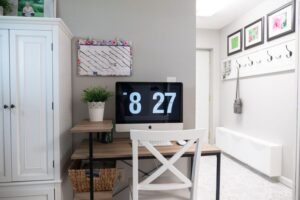
Even a small entryway can have a useful drop zone. Consider adding:
– A small tray for keys and sunglasses
– A wall-mounted shelf for small belongings
– A bowl for loose items
– A few hooks for bags and hats
– A narrow console table with drawers
Choose one location for each category of item. For example, keys may go in a tray, while bags hang on hooks. Clear homes make it easier to put things away without thinking about it.
If you have children, use lower hooks or baskets so they can reach their own belongings. Assigning a specific space to each person can also reduce morning confusion.
Make Use of Wall Space
When floor space is limited, look up. Vertical storage is one of the easiest ways to organize a small entryway without making it feel crowded.
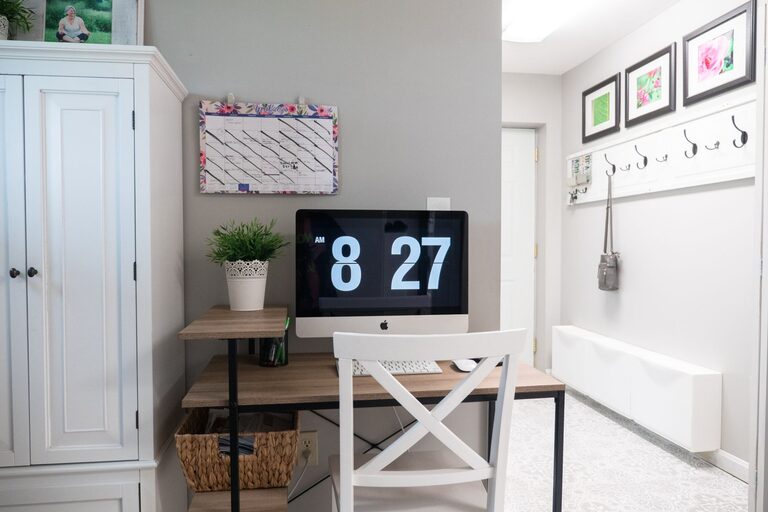
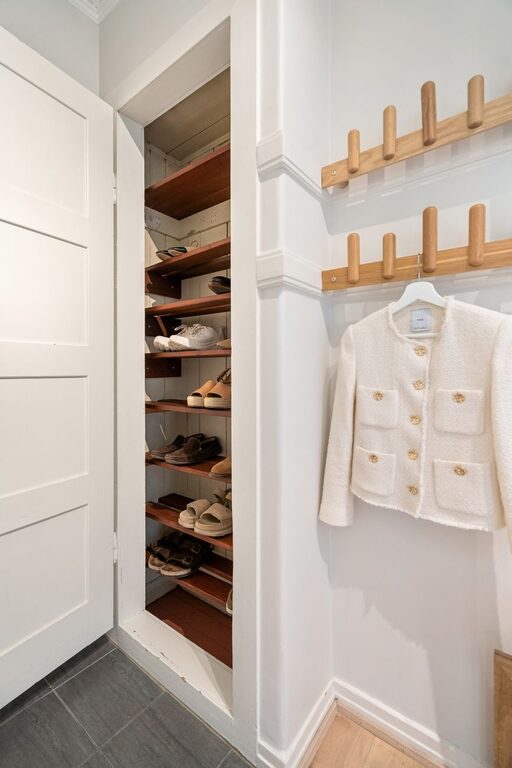
Install a row of hooks for coats, jackets, hats, and reusable shopping bags. A pegboard can provide flexible storage for several types of items, while a narrow wall shelf can hold baskets or decorative pieces.
You can also use:
– Over-the-door organizers
– Floating shelves
– Wall-mounted mail holders
– Small hooks inside a closet door
– A tall, slim storage cabinet
Keep frequently used items within easy reach. Store occasional items higher up or in a nearby closet. This keeps the entryway practical while making the most of every available surface.
Organize Shoes by Frequency of Use
Shoes are often the biggest source of entryway clutter. Instead of allowing them to pile up, create a simple system based on how often they are worn.
Keep everyday shoes in an open basket, cubby, or shoe rack near the door. Store special-occasion shoes and out-of-season footwear in a closet or bedroom storage area.
A few helpful options include:
Shoe Rack
A shoe rack keeps pairs together and makes the floor easier to clean. Choose a narrow model if your entryway is small.
Storage Bench
A bench with hidden storage gives you a place to sit while putting on shoes and provides room for footwear, umbrellas, or bags.
Shoe Baskets
Large baskets work well for casual shoes and can be moved easily when you need to clean. To keep them organized, limit the number of pairs each basket can hold.
Vertical Shoe Organizer
A tall organizer uses wall or closet space efficiently. It can be especially useful in apartments or narrow hallways.
Set a household rule that shoes should be placed in their assigned spot as soon as you come inside. This small habit prevents clutter from spreading.
Add a Place for Coats and Bags
Coats and bags often end up on the nearest chair because there is no convenient place to store them. Make storage easy by placing hooks near the door.
Use sturdy hooks for heavier coats and bags. If several people share the space, label hooks or assign one to each person. This makes it clear where belongings should go.
For a more polished appearance, keep only the current season’s outerwear in the entryway. Store winter coats, rain gear, or lightweight jackets elsewhere when they are not needed.
A coat rack can work well in a larger entryway, while wall hooks are usually better for small areas. If you have a closet, use slim hangers and avoid filling it completely. Leave enough space for items to be removed and returned easily.
Set Up a Mail and Paper Station
Mail can quickly create piles near the entrance. A small paper station helps you manage it before it spreads through the house.
Use separate holders or baskets for:
– Mail to review
– Items to file
– Papers to recycle
– Outgoing mail
Sort mail as soon as you bring it inside. Recycle unwanted flyers and envelopes right away, and choose a regular time to review anything that needs attention.
Avoid placing paperwork on a console table without a plan. A simple holder keeps papers contained and makes the surface look less cluttered.
Use Baskets for Small Essentials
Baskets are useful for items that are difficult to store individually. They can hold scarves, gloves, hats, pet supplies, or reusable bags.
Choose baskets that fit under a bench, on a shelf, or inside a cabinet. Assign one basket to each category rather than mixing everything together. For example, keep cold-weather accessories in one basket and dog-walking supplies in another.
Labels can help, especially if multiple baskets look alike. Simple labels such as “Hats,” “Bags,” or “Outdoor Items” make it easier for everyone to return things to the right place.
Keep the Entryway Easy to Clean
An organized entryway should also be easy to maintain. Use a durable doormat inside and outside the door to reduce the amount of dirt brought into your home.
If your area has wet or snowy weather, add a washable tray for damp shoes and boots. Keep a small towel nearby for wiping paws, shoes, or umbrellas.
Choose storage pieces that can be moved or wiped down easily. Open shelves may look attractive, but closed storage can be helpful if you want to hide everyday clutter.
Add One or Two Decorative Touches
Organization does not have to look plain. A mirror can make a small entryway feel larger and gives you a quick way to check your appearance before leaving. A plant, framed print, or small lamp can add warmth without taking up much space.
Keep decorations limited so they do not interfere with storage. The most useful pieces often serve two purposes, such as a mirror with a shelf or a bench with hidden compartments.
Build a Simple Daily Routine
The best entryway organization system is one that is easy to use. Create a short routine for coming home:
- Place keys in the tray.
- Hang up your coat and bag.
- Put shoes on the rack or in the basket.
- Sort mail immediately.
- Return anything that does not belong in the entryway.
Once these steps become habits, the space will stay tidy with very little effort. Spend five minutes at the end of each day returning misplaced items and clearing surfaces.
A well-organized entryway does more than improve the appearance of your home. It saves time, reduces daily stress, and makes leaving and returning home easier. Start with one small area, such as shoes or keys, and build your system from there.